
Cat 6 vs Cat 12 LTE CPE: Balancing Throughput, Carrier Aggregation and CapEx in FWA Deployments
A technical engineering guide comparing Cat 6 (2CC) and Cat 12 (3CC/4CC) LTE CPE architectures, examining 4x4 MIMO, CA efficiency, and operator CapEx tradeoffs.
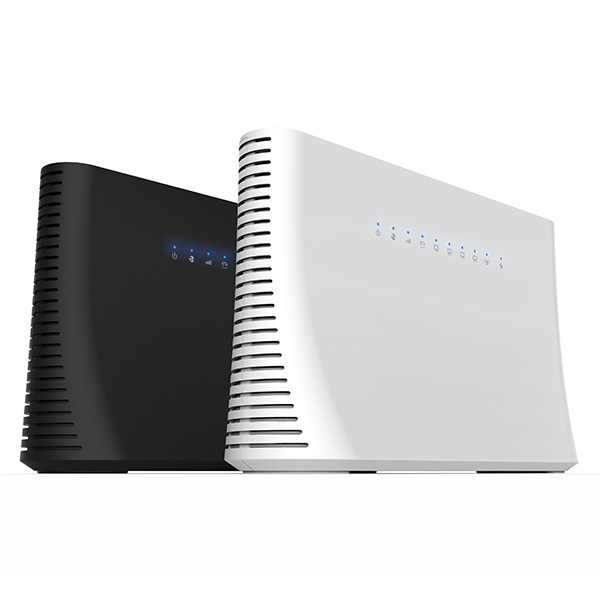
While the global telecommunications industry continues its rollout of 5G Standalone and Non-Standalone networks, 4G LTE-Advanced (LTE-A) remains the financial and operational backbone of residential Fixed Wireless Access (FWA) across suburban territories, emerging economies, and rural markets.
For telecom operators, regional WISPs, and commercial integrators, the core procurement challenge is not simply choosing between 4G and 5G, but identifying the right LTE category for long-term subscriber premises deployments: specifically, LTE Category 6 (Cat 6) versus LTE Category 12 (Cat 12) customer premises equipment (CPE).
This guide examines the radio frequency (RF) mechanics, Carrier Aggregation (CA) capabilities, spectral efficiency differences, and total cost of ownership (TCO) considerations governing Cat 6 and Cat 12 CPE selection.
Technical Comparison Matrix: LTE Cat 6 vs. LTE Cat 12
| Feature / Metric | LTE Category 6 CPE (AceTel R1260S / R820) | LTE Category 12 CPE (AceTel R820 Cat12) |
|---|---|---|
| 3GPP Specification | Release 10 / 11 (LTE-Advanced) | Release 11 / 12 (LTE-Advanced Pro) |
| Peak Downlink Throughput | Up to 300 Mbps | Up to 600 Mbps |
| Peak Uplink Throughput | Up to 50 Mbps | Up to 100 Mbps (with 2CC UL CA) |
| Carrier Aggregation (DL) | 2-Carrier Aggregation (2CC CA) | 3-Carrier / 4-Carrier Aggregation (3CC/4CC) |
| Max Aggregated Bandwidth | 40 MHz (2x 20 MHz channels) | 60 MHz (3x 20 MHz channels) |
| Downlink Modulation | 64-QAM | 256-QAM (33% spectral efficiency boost) |
| MIMO Configuration | 2x2 DL MIMO | 4x4 DL MIMO |
| Hardware BOM / Unit Cost | Highly economical (base tier) | ~25–35% higher silicon investment |
| Power Consumption | 6W–9W average | 8W–12W average |
| Recommended Service Tier | 30 Mbps to 80 Mbps unlimited plans | 100 Mbps to 250 Mbps premium broadband |
Key Technological Differentiators
1. Carrier Aggregation Mechanics (2CC vs. 3CC)
Carrier Aggregation is the foundational mechanism that allows LTE routers to bond separate slices of cellular spectrum into a single high-bandwidth pipeline:
- Cat 6 (2CC): Combines two contiguous or non-contiguous frequency blocks (e.g., Band 3 1800 MHz + Band 20 800 MHz), aggregating up to 40 MHz of spectrum for a theoretical maximum downlink of 300 Mbps.
- Cat 12 (3CC): Can bond three discrete frequency bands simultaneously (e.g., Band 1 + Band 3 + Band 7), reaching up to 60 MHz of aggregated bandwidth. In fragmented spectrum environments where an operator owns smaller chunks across multiple bands, Cat 12 extracts significantly higher usable bandwidth from existing cell towers.
2. Higher-Order Modulation: 256-QAM
LTE Cat 6 uses 64-QAM modulation, transmitting 6 bits of data per symbol. Cat 12 introduces 256-QAM on the downlink, transmitting 8 bits per symbol. Under favorable signal conditions (high SINR), 256-QAM delivers a direct 33% increase in data transfer rates using the exact same radio spectrum.
3. Spatial Diversity: 4x4 DL MIMO
While standard Cat 6 routers operate with 2x2 MIMO (two internal antennas receiving two spatial data streams), Cat 12 hardware integrates a 4-antenna RF front-end supporting 4x4 DL MIMO. This doubles the spatial multiplexing capacity, improving connection reliability in dense urban propagation environments and indoor multi-path reflection scenarios.
When to Deploy Cat 6 vs. Cat 12
                       [ Operator Network Assessment ]
                                      │
               What is Your Spectrum Ownership Architecture?
                                │               │
          Fragmented Spectrum (3+ Bands)    Contiguous Spectrum (1-2 Bands)
                                │               │
                                ▼               ▼
                    [ Deploy Cat 12 CPE ]     Are Subscribers Paying for >100 Mbps?
                    - Maximizes 3CC bonding             │               │
                    - 256-QAM throughput               YES              NO
                    - Premium households                │               │
                                                        ▼               ▼
                                              [ Deploy Cat 12 ]   [ Deploy Cat 6 ]
                                              (R820 Cat 12)       (R1260S / R820)
When LTE Cat 6 is the Optimal Choice
- Cost-Sensitive Mass Residential Rollouts: For mass-market prepaid or entry-level postpaid broadband tiers (30–60 Mbps), Cat 6 offers the lowest unit hardware cost, shortening the payback period on subsidized CPE.
- Rural & Fringe Coverage: In rural areas where base stations only transmit on one or two low-frequency anchor bands (e.g., Band 20 or Band 28), 3CC aggregation cannot be utilized. A Cat 6 router delivers identical performance to Cat 12 at significantly lower CapEx.
- Backup WAN for Small Business: For retail POS terminals, ATM cash machines, and enterprise branch failover, Cat 6 provides ample bandwidth with superior thermal and electrical stability.
When LTE Cat 12 is Necessary
- Tiered Speed Monetization (100–200 Mbps): When marketing high-speed wireless broadband to compete against wireline VDSL or legacy coaxial cable, Cat 12 is required to reliably maintain >100 Mbps speeds during peak hours.
- Cell Tower Congestion Mitigation: In high-density suburban clusters, 256-QAM and 3CC aggregation allow Cat 12 CPE to download data packets faster, clearing radio resources more rapidly and reducing cell tower airtime congestion for all users.
AceTel Recommended Hardware Platforms
- AceTel R1260S 4G LTE Cat6 CPE Router: Features 2CC carrier aggregation, AC1200 dual-band Wi-Fi, 4 full Gigabit Ethernet ports, and an optional internal 4000mAh battery backup for regions with unstable power grids.
- AceTel R820 4G LTE Cat6/Cat12 Router: Modular hardware platform supporting both Cat 6 and Cat 12 modems with 4x4 MIMO, dual-band Wi-Fi, and VoLTE HD voice calling via RJ11.
- AceTel R868 4G Cat4/Cat6 Router: Robust industrial-grade desktop router with external cellular antennas and TR-069 ACS remote provisioning.
Frequently Asked Questions (FAQ)
Can a Cat 12 CPE operate on a Cat 6 or Cat 4 cellular tower?
Yes. LTE categories are strictly backward-compatible. A Cat 12 device connected to a base station that only supports 2CC or single-carrier transmission will automatically operate in Cat 6 or Cat 4 mode without manual reconfiguration.
Does AceTel support custom TR-069 data models across both platforms?
Yes. Both AceTel Cat 6 and Cat 12 routers support comprehensive TR-069, TR-181, and SNMP management protocols. Operators can monitor signal metrics (RSRP, RSRQ, SINR, CQI), execute remote carrier band locks, and trigger batch firmware updates from their central ACS.
For pilot sample evaluations, custom band mapping, or volume OEM/ODM pricing, please contact our engineering team or explore our White Label Manufacturing Program.
Technical insight published by AceTel's Field Application Engineering (FAE) and Hardware Architecture team. Tested across 3GPP and carrier-grade RF laboratory standards. Have project questions? Consult our engineers.
Request a Quote for Cat 6 vs Cat 12 LTE CPE: Balancing Throughput, Carrier Aggregation and CapEx in FWA Deployments
Tell us your target quantity, destination market and customization needs. Our sales engineers reply within 24 hours with pricing, MOQ options and lead time.