
Qualcomm Snapdragon X55 + Wi-Fi 6 Enterprise CPE Architecture: AceTel R5089 Deep Dive
An architectural examination of the AceTel R5089 enterprise 5G CPE router, pairing the Qualcomm Snapdragon X55 modem with the Networking Pro 1200 platform for 3.3 Gbps 5G downlink and carrier-grade Wi-Fi 6.
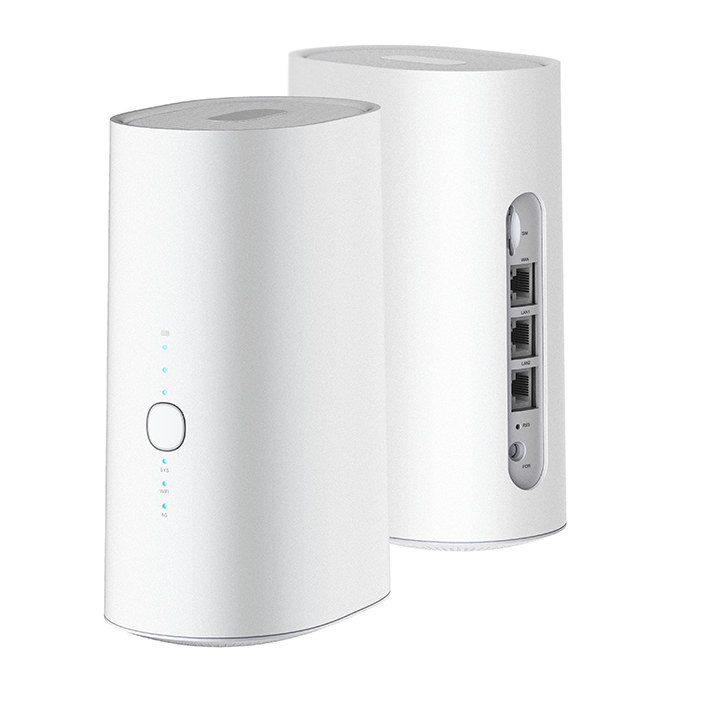
As mobile operators accelerate the transition from 4G LTE to 5G Standalone (SA) and Non-Standalone (NSA) architectures, enterprise customer premises equipment (CPE) must deliver more than raw throughput. Enterprise deployments in branch offices, healthcare clinics, retail headquarters, and smart factories demand deterministic latency, carrier-grade Wi-Fi concurrency, robust multi-WAN failover, and hardware-level thermal stability.
The AceTel R5089 Gigabit 5G CPE was designed to address these demanding requirements by combining Qualcomm’s Snapdragon X55 5G Modem-RF system with the Qualcomm Networking Pro 1200 Wi-Fi 6 platform.
Below is an engineering overview of the platform architecture, RF frontend design, thermal management, and carrier software capabilities.
1. Dual-Core Silicon Platform Architecture
The R5089 separates cellular baseband processing from local routing and Wi-Fi processing to eliminate bus bottlenecks and maintain wire-speed throughput under heavy packet inspection loads:
[5G NR / LTE RF Antennas (4x4 MIMO)]
               │
               ▼
[Qualcomm Snapdragon X55 5G Baseband & Transceiver]
  ├── 3GPP Rel-15 SA/NSA Dual-Mode Engine
  ├── Sub-6 GHz Downlink (Up to 3.3 Gbps) & Uplink (Up to 500 Mbps)
  └── Worldwide Multi-Band RF Frontend (256-QAM)
               │ (High-Speed PCIe Gen3 Interconnect)
               ▼
[Qualcomm Networking Pro 1200 Host Network Processor]
  ├── Quad-Core ARM Cortex-A53 @ 2.2 GHz
  ├── Hardware Network Acceleration Engine (PPE)
  ├── Dual-Band 8-Stream Wi-Fi 6 Subsystem (802.11ax)
  └── Triple Gigabit Ethernet MACs (1 WAN/LAN + 2 LAN)
By offloading packet forwarding directly to Qualcomm’s dedicated Packet Processing Engine (PPE), the R5089 sustains gigabit NAT routing with minimal CPU overhead, freeing computing headroom for local VPN tunnels, firewall rules, and containerized edge workloads.
2. RF Frontend Design & Global Band Coverage
To ensure global interoperability across tier-1 mobile operators across North America, EMEA, APAC, and LATAM, the R5089 RF frontend features high-efficiency power amplifiers and low-noise amplifiers (LNAs) with comprehensive 3GPP spectrum support:
- 5G NR Bands (Sub-6 GHz): n1, n2, n3, n5, n7, n8, n12, n20, n28, n41, n66, n71, n77, n78, n79
- LTE-FDD Bands (4x4 MIMO DL): B1, B2, B3, B4, B5, B7, B8, B9, B12, B13, B14, B17, B18, B19, B20, B25, B26, B28, B29, B30, B32, B66, B71
- LTE-TDD Bands: B34, B38, B39, B40, B41, B42, B48 (CBRS)
- 3G Fallback: WCDMA B1/B2/B3/B4/B5/B6/B8/B19
Multi-Antenna Isolation & Polarization
The unit integrates four external high-gain wideband cellular antenna ports (SMA interface) alongside internal precision-tuned omnidirectional antennas. This hybrid architecture ensures superior spatial diversity, optimal SINR (Signal-to-Interference-plus-Noise Ratio), and reliable beam tracking even in cell-edge deployments or reinforced concrete structures.
3. Wi-Fi 6 (802.11ax) Multi-User Concurrency
The Wi-Fi subsystem leverages Qualcomm’s multi-user traffic management architecture to deliver deterministic Wi-Fi performance in high-density office environments:
| Specification | 2.4 GHz Band | 5 GHz Band |
|---|---|---|
| Streams | 4x4 MU-MIMO | 4x4 MU-MIMO (Up to 8-stream total) |
| Max Physical Rate | Up to 1148 Mbps | Up to 4804 Mbps (with 160MHz) |
| OFDMA Subcarriers | Up to 37 Resource Units (RUs) | Up to 74 Resource Units (RUs) |
| Modulation | 1024-QAM (25% higher PHY throughput vs 256-QAM) | 1024-QAM |
| Security | WPA2 / WPA3-Personal & WPA3-Enterprise | WPA2 / WPA3-Personal & WPA3-Enterprise |
With Target Wake Time (TWT) and BSS Coloring, the R5089 actively minimizes co-channel interference from neighboring consumer access points, ensuring consistent quality of service for VoIP conference calls and enterprise video streams.
4. Mechanical & Thermal Engineering for 24/7 Duty Cycles
Commercial desktop routers often throttle processor frequencies under sustained multi-gigabit workloads due to localized thermal buildup.
The R5089 utilizes an advanced passive thermodynamic chimney structure:
- Die-Cast Aluminum Heat Sink: Directly couples to the Snapdragon X55 baseband, PMIC, and Networking Pro processor via 6.0 W/m-K thermal conductive interface material.
- Vertical Convective Airflow Channels: Natural convection draws cool air from the bottom intake perimeter, passing across finned heat spreaders and venting through top concealed perimeter louvers.
- No Moving Parts: Zero fans ensure silent operation, zero mechanical dust accumulation, and an extended Mean Time Between Failures (MTBF) exceeding 100,000 operational hours at 45°C ambient temperature.
5. Enterprise Software Stack & Edge Storage Option
The R5089 runs AceTel’s carrier-hardened Linux/OpenWrt operating environment, engineered for straightforward enterprise integration:
- Dual-WAN Auto-Failover: Dynamic health check monitoring between wired Gigabit WAN (fiber/cable) and 5G cellular uplink with sub-second failover for business continuity.
- Network Slicing & Dual-APN: Allows telecom operators to allocate separate QoS data paths (e.g., APN 1 for public internet traffic, APN 2 for secured corporate intranet or IMS voice).
- Remote Lifecycle Management: Full support for TR-069, TR-181, and TR-143 CWMP standards for centralized operator fleet management and automated differential FOTA updates.
- Hardware Expansion: Includes a reserved internal high-speed SSD/storage bus interface, allowing OEM/ODM clients to configure the R5089 as a localized Network Attached Storage (NAS) or an edge computing platform running lightweight microservices.
Summary & Operator Sample Availability
The AceTel R5089 represents a reference-standard implementation of Qualcomm 5G and Wi-Fi 6 technologies, offering telecom operators and enterprise network integrators a reliable, scalable wireless broadband platform.
- Inspect complete technical specifications on the AceTel R5089 5G CPE Product Page.
- Learn about AceTel’s ODM capabilities and manufacturing standards on Why AceTel.
- Learn about carrier firmware customization on the Custom Firmware Program Page.
- To request evaluation units and engineering data sheets, contact inquiry@acetels.com or submit your project requirements via our B2B RFQ Portal.
Technical insight published by AceTel's Field Application Engineering (FAE) and Hardware Architecture team. Tested across 3GPP and carrier-grade RF laboratory standards. Have project questions? Consult our engineers.
Request a Quote for Qualcomm Snapdragon X55 + Wi-Fi 6 Enterprise CPE Architecture: AceTel R5089 Deep Dive
Tell us your target quantity, destination market and customization needs. Our sales engineers reply within 24 hours with pricing, MOQ options and lead time.